
This guide explains how to evaluate bong replacement parts through product types, relevant specifications and clearly described compatibility. A replacement glass component is only useful when its connector, orientation and clearance are compatible with the existing piece. Similar-looking photographs are not enough to establish fit. You will find comparisons, a practical checklist and focused topics to explore further. The aim is to make the catalog easier to navigate without pretending that one design suits every person or every setup.

Bong Joint Sizes Explained
Joint labels such as 10, 14 and 18 mm describe commonly used nominal connection sizes, not the entire bowl diameter or the length of a downstem. Actual taper conventions and tolerances are product-specific. A male fitting is the projecting tapered section; a female fitting receives the matching tapered section. Matching the nominal diameter without the correct direction does not guarantee a fit.
A useful way to make this distinction tangible is to check connection size and male/female configuration alongside taper, angle and inserted length where applicable. Keep form factor and feature labels separate when interpreting catalog categories.
Male vs. Female Bong Joints
A male ground-glass joint has a tapered section that inserts into a matching receptacle. It is not inherently tied to a particular product category. A female joint is the counterpart that accepts a male connection of the appropriate nominal size and taper. Some adapters contain both configurations.
A useful way to make this distinction tangible is to check taper, angle and inserted length where applicable alongside clearance around the body and adjacent components. If marketing terminology differs between brands, use physical properties as the common vocabulary.
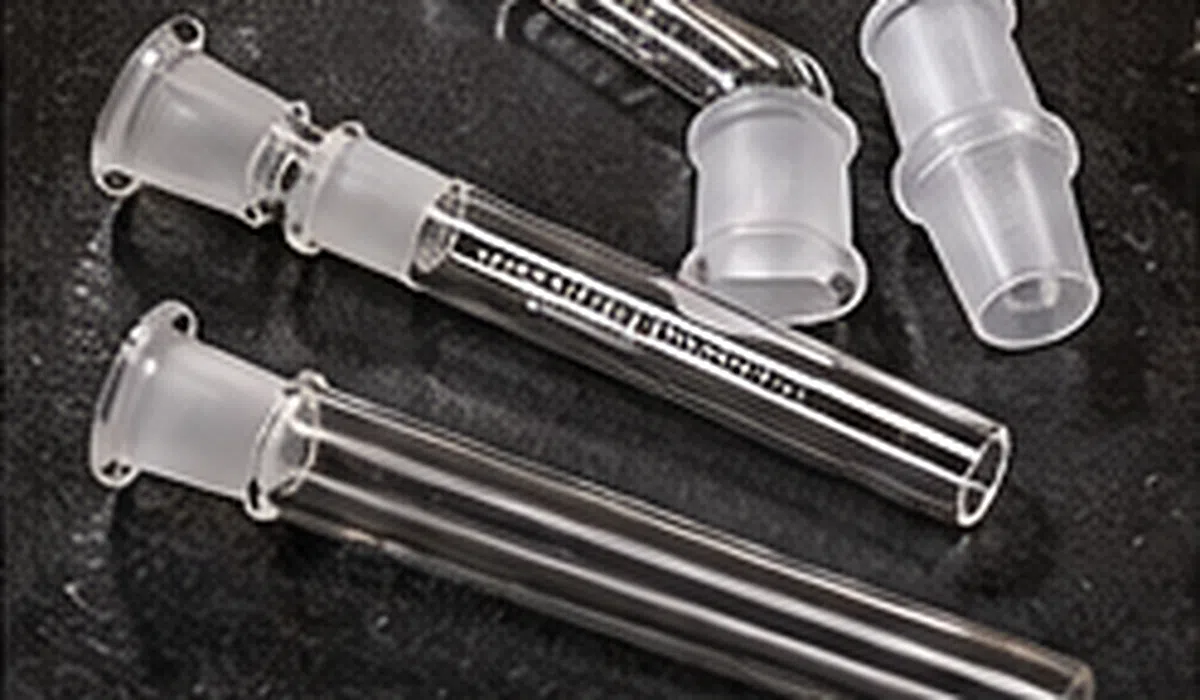
How to Measure a Downstem
Downstem listings can measure total length, insertion length, ground-joint-to-tip distance or another convention. Compare the diagram before choosing a number. A downstem can connect to a bong body at one end and receive a bowl at the other, potentially using different nominal sizes. Record both measurements.
A useful way to make this distinction tangible is to check clearance around the body and adjacent components alongside verified manufacturer part number or specification drawing. Remember that measurements describe an individual product, not every product in its category.
How to Identify a Replacement Bong Bowl
The bowl's joint gender and nominal size determine whether it mates with the receiving piece. Bowl capacity or external opening width is a separate feature. A matching manufacturer replacement code is stronger evidence than a photo. If the original is missing, compare the device model and verified connection specifications.
A useful way to make this distinction tangible is to check verified manufacturer part number or specification drawing alongside connection size and male/female configuration. Exact model-level documentation is stronger evidence than a general category rule.
Bong Adapters: Types & Compatibility
An adapter can convert one labeled connection format into another in certain compatible setups. It cannot be assumed to solve arbitrary fit or geometry problems. A complete adapter specification should state input gender and nominal size, output gender and nominal size, plus any angle change.
A useful way to make this distinction tangible is to check connection size and male/female configuration alongside taper, angle and inserted length where applicable. Keep form factor and feature labels separate when interpreting catalog categories.

Common Bong Parts Explained
A bong may have a chamber, neck, base, bowl, downstem and glass joint; not every model has each as removable parts. Percolators and ice catchers are design features rather than mandatory universal parts. A welded internal percolator cannot be treated like a replaceable bowl. The specification should show which pieces are detachable.
A useful way to make this distinction tangible is to check taper, angle and inserted length where applicable alongside clearance around the body and adjacent components. If marketing terminology differs between brands, use physical properties as the common vocabulary.
Common Reasons Bong Parts Don't Fit
Two parts can share a 14 mm label but be the same connection gender. Matching the number alone is insufficient. Similar advertised dimensions do not guarantee identical taper or manufacturing tolerances. A secure fit should not require excessive force.
A useful way to make this distinction tangible is to check clearance around the body and adjacent components alongside verified manufacturer part number or specification drawing. Remember that measurements describe an individual product, not every product in its category.
Glass Joint Angles: What to Check
A joint may be upright or angled relative to the main body; replacement accessory orientation needs to account for this geometry. Angle is separate from diameter and gender. An item that nominally matches the joint may still contact the glass chamber or extend awkwardly because of its angle or body shape.
A useful way to make this distinction tangible is to check verified manufacturer part number or specification drawing alongside connection size and male/female configuration. Exact model-level documentation is stronger evidence than a general category rule.
How to compare products systematically
Imagine an accessory and a bong both use the same nominal diameter. A mismatch in connection gender, angle or protruding length can still prevent a proper fit. Use a complete set of measurements and never force glass into position.
For the entire bong parts & compatibility category, a consistent worksheet is more reliable than an intuitive shortlist based only on photographs. Compare the same four categories of facts for every candidate, mark anything unknown, and use manufacturer documentation for details that affect fit or care.
Connection size and male/female configuration
Taper, angle and inserted length where applicable
Clearance around the body and adjacent components
Verified manufacturer part number or specification drawing
Frequently asked comparison questions
What should shoppers check about what joint size measures?
Joint labels such as 10, 14 and 18 mm describe commonly used nominal connection sizes, not the entire bowl diameter or the length of a downstem. Actual taper conventions and tolerances are product-specific. Look for a specific model and its relevant dimensions before relying on a general marketing claim.
What should shoppers check about female describes the receiving socket?
A female joint is the counterpart that accepts a male connection of the appropriate nominal size and taper. Some adapters contain both configurations. An actual parts list and verified product specifications provide more detail than a cropped photo.
What should shoppers check about angle and internal clearance?
Body angle and chamber depth affect whether a proposed part can fit without hitting glass or sitting incorrectly. Measure with the device clean and supported. Check whether removable components are included or sold separately, and follow the maker-specific guidance.
What should shoppers check about keep the list factual?
Record connection, material, included parts and care needs; do not assume that all similar-looking clear glass pieces share a standard fitting. If an essential specification is missing, leave the answer unverified rather than presuming parts or materials match.
What to explore next
The related reading list for this guide includes eight narrower articles. They address specific terminology, product comparisons and measurements that are too detailed for a single overview. Only published articles should become clickable recommendations. For shopping-oriented questions, the separate collection links point to catalog pages rather than competing with this informational guide.
All sizes, material labels and compatibility claims in this guide should be checked against the actual product records before publishing. This guide does not claim hands-on testing, medical benefits or a particular shipping policy.